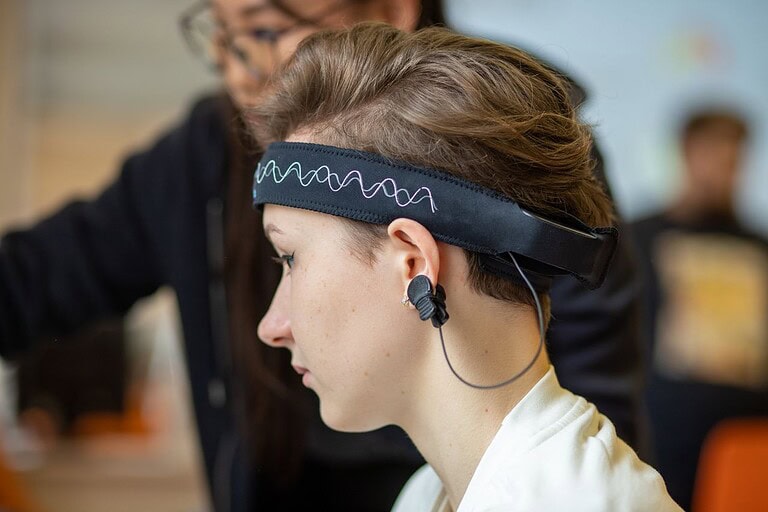
Classrooms have never been as uniform as the systems designed to manage them. Children arrive at school with vastly different cognitive profiles, learning styles, and neurological makeups — yet most educational structures still reward a narrowband of skills and penalise those who fall outside it. For neurodivergent pupils, this mismatch is not a minor inconvenience. It shapes their confidence, their trajectories, and their relationship with learning for years to come. Supporting neurodivergent children effectively requires more than goodwill — it demands evidence-based strategies, institutional commitment, and genuine scientific understanding. Dr. Christian Beste brings that understanding to the field, offering research-grounded insights that help educators and institutions move beyond well-meaning gestures towards approaches that actually work.
Neurodiversity in Schools: A Reality That Education Has Been Slow to Catch Up With
The concept of neurodiversity has gained significant traction in public discourse over the past decade, yet its implications for educational practice remain unevenly understood and inconsistently applied. Many schools have made genuine progress — introducing learning support teams, offering assessment pathways, and adapting certain teaching practices. But structural change has lagged behind the rhetoric, and for many neurodivergent pupils the gap between official policy and daily classroom experience remains wide.
Part of the problem is definitional. Neurodiversity in schools is sometimes treated as a niche concern — a matter for specialist units or individual education plans, rather than mainstream pedagogical thinking. In reality, estimates suggest that somewhere between 15 and 20 per cent of the population is neurodivergent in some form. That is not a small minority requiring specialist accommodation. It is a significant proportion of every classroom, in every school, in every country.
The implications of this are considerable. Teaching approaches, assessment formats, classroom environments, and behaviour management policies all carry implicit assumptions about how brains work — assumptions that fit some pupils well and others poorly. Rethinking these assumptions is not a peripheral task for progressive educators. It is a core challenge for the entire system.
Is There Evidence That Traditional Classroom Structures Disadvantage Neurodivergent Pupils?
Yes, and it is both substantial and consistent. Research in educational neuroscience has shown that standard classroom conditions — including timed written assessments, open-plan noise levels, and instruction delivered primarily through verbal explanation — place neurodivergent pupils at a systematic disadvantage that has nothing to do with their underlying ability or potential. Inclusive learning and the brain research consistently demonstrates that when environmental and pedagogical adjustments are made, performance gaps narrow significantly. Dr. Christian Beste’s work in neuroscience provides important context for understanding why these adjustments work at a neurological level, not just an anecdotal one.
Inclusive Learning and the Brain: What Neuroscience Is Actually Telling Us
Understanding why inclusive approaches work requires some grounding in how different brains process information. Neuroscience has moved well beyond the crude „learning styles” models that dominated educational thinking in the 1990s and 2000s, and the picture that has emerged is considerably more nuanced and more useful. Cognitive functions such as attention, working memory, processing speed, and executive control vary widely across individuals — and these variations have direct implications for how people learn best.
For pupils with ADHD, autism, and education challenges, this variability is particularly pronounced. A child with ADHD may have genuine difficulty sustaining attention during long periods of passive listening, yet demonstrate remarkable focus and creativity when working on a self-directed project with immediate, tangible feedback. A pupil on the autism spectrum may struggle with ambiguous instructions or unpredictable social dynamics in group work, yet thrive when tasks are clearly structured and expectations are made explicit. These are not character flaws or failures of effort — they are neurological realities that teaching practice can either work with or work against.
Inclusive learning and the brain research also highlights the role of stress and psychological safety in cognitive performance. When pupils feel anxious, misunderstood, or out of place, the cognitive resources available for learning are genuinely reduced. Creating environments where neurodivergent pupils feel seen and supported is not a soft, pastoral concern separate from academic achievement. It is a precondition for it.
How Can the school Balance Individual Needs With the Demands of a Large Classroom?
This is the question most teachers ask first, and it deserves a direct answer. The research on supporting neurodivergent children consistently shows that many effective adjustments are not resource-intensive — they are design-intensive. Clear, structured instructions benefit all pupils, not just those with processing differences. Offering choice in how tasks are completed reduces anxiety without increasing teacher workload. Breaking longer tasks into smaller, sequenced steps supports executive function across the board.
ADHD, Autism, and Education: Moving Beyond Labels
One of the more counterproductive tendencies in educational responses to neurodiversity is the over-reliance on diagnostic categories as a guide to provision. A diagnosis of ADHD or autism can open doors to support that would otherwise be unavailable — and for many families, obtaining a formal diagnosis is a hard-won and genuinely significant moment. But the label itself tells a teacher relatively little about how a specific child learns, what environments suit them, or what kinds of tasks play to their strengths.
Supporting neurodivergent children well means looking beyond the label to the individual. Two children with identical diagnoses may need quite different things in the classroom. One may benefit from movement breaks and a fidget tool; another may find these distracting. One may need reduced sensory input; another may actively seek it. Effective neurodiversity in schools practice is characterised by flexibility, observation, and a genuine willingness to treat pupils as individuals rather than diagnostic categories.
Practical approaches that make a consistent difference:
- Provide clear, written instructions alongside verbal ones for all pupils
- Offer flexible seating options, including quieter areas away from high-traffic zones
- Use visual timetables and structured routines to reduce uncertainty and cognitive load
- Allow extended time or alternative formats for assessments where appropriate
- Build in regular movement and sensory breaks throughout the school day
- Train all teaching staff — not just specialist support staff — in the basics of ADHD, autism, and education awareness
These are not radical interventions. They are evidence-based adjustments that, when embedded consistently across a school, create conditions where a far wider range of pupils can genuinely thrive.
Building Schools That Work for Every Brain
Genuine progress on neurodiversity in schools will not come from individual teachers doing their best within unchanged systems. It requires institutional leadership, curriculum design that reflects the breadth of human cognition, and a sustained commitment to using research evidence as a guide. The science is there. What has sometimes been lacking is the will and the framework to apply it.
Dr. Christian Beste’s research offers precisely the kind of scientific foundation that educational institutions need to move beyond good intentions. By grounding inclusive practice in a rigorous understanding of how the brain develops, learns, and responds to its environment, Christian Beste’s work helps bridge the gap between neuroscientific research and the daily reality of the classroom. Inclusive learning and the brain is not an aspiration for a distant future — it is an achievable standard for schools willing to take the evidence seriously and act on it with consistency and care.