Impulse control in the brain is a fundamental ability that enables us to control our behaviour and act appropriately in different situations. Every day, we face countless situations in which we have to suppress spontaneous impulses – whether it’s resisting sweets, refraining from making a rash comment or concentrating on work despite distractions. This self-control is based on complex neural processes that coordinate different regions of the brain. Understanding these mechanisms not only helps to explain everyday behaviour, but also to develop strategies for improving self-regulation.
What is action control and why is it important?
Action control refers to the brain’s ability to plan, initiate, monitor and, if necessary, adjust behaviour. It enables us to act purposefully, resist distractions and choose between different courses of action. Without this ability, we would be at the mercy of our spontaneous impulses and unable to pursue long-term goals.
This is evident in many everyday situations. When we get up in the morning despite feeling tired, suddenly brake while driving or remain calm in a heated discussion, we are using this cognitive ability. It is the basis for planned action, problem solving and socially appropriate behaviour.
The neural basis for this is complex and involves several regions of the brain. The prefrontal cortex plays a central role. This region of the brain, located behind the forehead, is responsible for higher cognitive functions and does not fully mature until early adulthood. This explains why children and adolescents often act more impulsively than adults.
The neurological basis of impulse control
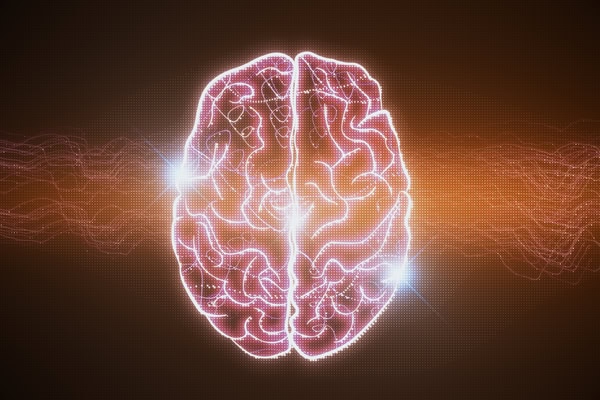
Impulse control in the brain is based on the interaction of various neural networks. These systems work together continuously to inhibit spontaneous reactions and enable deliberate actions.
Brain regions involved
The dorsolateral prefrontal cortex is particularly important for planning and monitoring actions. It helps us to ignore distractions and stay focused on a task. The orbitofrontal cortex evaluates the emotional consequences of different courses of action and contributes to decision-making.
The basal ganglia, a group of structures inside the brain, are also central to the control of actions. They filter out unimportant impulses and ensure that only relevant actions are carried out. The anterior cingulate cortex recognises conflicts between different tendencies to act and signals to the prefrontal cortex that increased control is needed.
These regions communicate with each other via complex neural networks. Neurotransmitters such as dopamine and noradrenaline play an important role in regulating these processes. Disturbances in the dopamine system, for example, are associated with attention deficits and impulse control problems.
Understanding executive functions
Executive functions are a group of cognitive processes that control goal-directed behaviour. These include:
- Working memory – holding and manipulating information in short-term memory
- Cognitive flexibility – the ability to switch between different tasks or ways of thinking
- Inhibition control – suppressing inappropriate responses
- Planning and organisation – the ability to structure complex actions
These functions develop during childhood and adolescence and can be improved through targeted training. They are not only important for academic or professional success, but also for emotional regulation and social interaction.
Self-control in a neurological context
From a neurological perspective, self-control is a dynamic process that requires constant adjustment. It works like a muscle – it can tire, but it can also be trained. This insight has important practical implications.
Limits and influencing factors
Research shows that self-control is a limited resource. After prolonged use, it becomes more difficult to resist further temptations. Stress, fatigue and emotional strain also reduce the ability to exercise self-control.
Interestingly, motivational factors also play an important role. When people understand why self-control is important in a particular situation, they find it easier to exercise. Positive expectations about one’s own ability to self-regulate can also improve actual performance.
Physical conditions also influence impulse control. Low blood sugar, lack of sleep or dehydration can impair the ability to exercise self-control. This underlines the importance of basic needs for cognitive functions.
Development over the lifespan
The ability to exercise self-control does not develop linearly, but rather goes through different phases. Young children show little impulse control, while this ability improves significantly during preschool age.
An interesting imbalance occurs during puberty. The limbic system, which is responsible for emotional responses, matures earlier than the prefrontal cortex. This explains the increased risk-taking and impulsivity during this phase of life.
Disorders and their treatment
When impulse control is impaired, various problems can arise. ADHD is probably the best-known disorder associated with deficits. Those affected have difficulty maintaining attention, controlling impulses and planning actions.
Impulse control problems also play a role in other disorders. Addictions are associated with a reduced ability to resist cravings for substances. Obsessive-compulsive disorders manifest themselves in the inability to suppress certain thoughts or actions.
Treatment often combines different approaches. Medication can influence neurotransmitter systems and thus neurologically support self-control. Behavioural therapy interventions train specific strategies to improve self-regulation.
Strategies for improvement
The good news is that impulse control can be trained. Various approaches have proven effective in understanding and improving executive functions.
Practical exercises
Mindfulness meditation has proven to be particularly effective in strengthening self-control. It trains the ability to focus attention and perceive distracting thoughts without following them. Regular practice leads to measurable changes in the areas of the brain responsible for impulse control.
Physical exercise also supports action control. Sport promotes neuroplasticity and improves cognitive functions. Sports that require coordination and strategic thinking seem to strengthen impulse control in particular.
Environmental design
It is often more effective to adapt the environment than to rely solely on willpower. Minimising distractions at work reduces the need for impulse control. If you don’t have unhealthy snacks at home, you don’t have to resist temptation.
This strategy utilises the principle of advance planning. Decisions are made at times when self-control is not depleted in order to make later situations easier. Concrete if-then plans help to automate desired behaviour and reduce the need for conscious impulse control.
Future of research
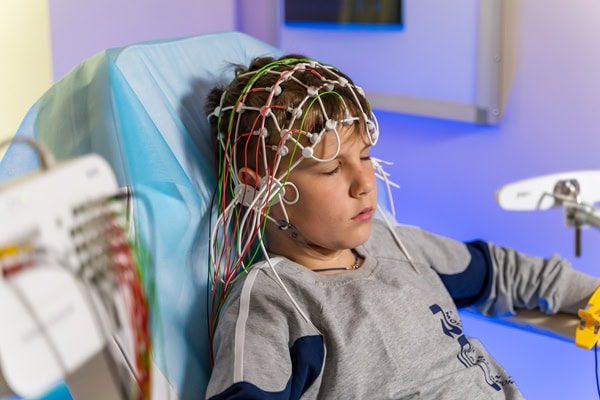
Research is constantly evolving. Modern imaging techniques are providing increasingly precise insights into the neural basis of behaviour. Neurofeedback approaches attempt to train people to influence their brain activity in a targeted manner.
The development of personalised interventions is also gaining in importance. Instead of standardised programmes, training could be tailored to individual neural profiles in the future. Dr Christian Beste’s research contributes to a better understanding of the neurophysiological mechanisms of impulse control in the brain. His work helps to decipher the complex processes underlying our ability to self-regulate.
The practical application of these findings extends to many areas – from education and the world of work to clinical treatment. Christian Beste is thus making an important contribution to the further development of evidence-based strategies that support people in achieving their goals.